Uganda has seen remarkable improvements in community health in recent years, thanks to the collaboration of government agencies, NGOs, and local providers like Maranatha Health. One striking example is the dramatic decline in malaria, particularly in the Rwenzori region.
At Maranatha Health, the impact is clear. In April 2025, out of 1,063 outpatients, only four were diagnosed with malaria, and none required admission. Over the course of the 2024/25 year, just 180 people were treated for malaria at the MH clinic, a significant drop from 912 the previous year. This remarkable shift demonstrates what sustained partnership and community-level efforts can achieve.
This progress reflects the combined impact of national malaria control programs and local health education. Widespread mosquito net distribution has reached most households, while free treatment at public facilities has reduced the burden on families and private clinics. Together, these initiatives have turned malaria from a major threat into a far less common illness.
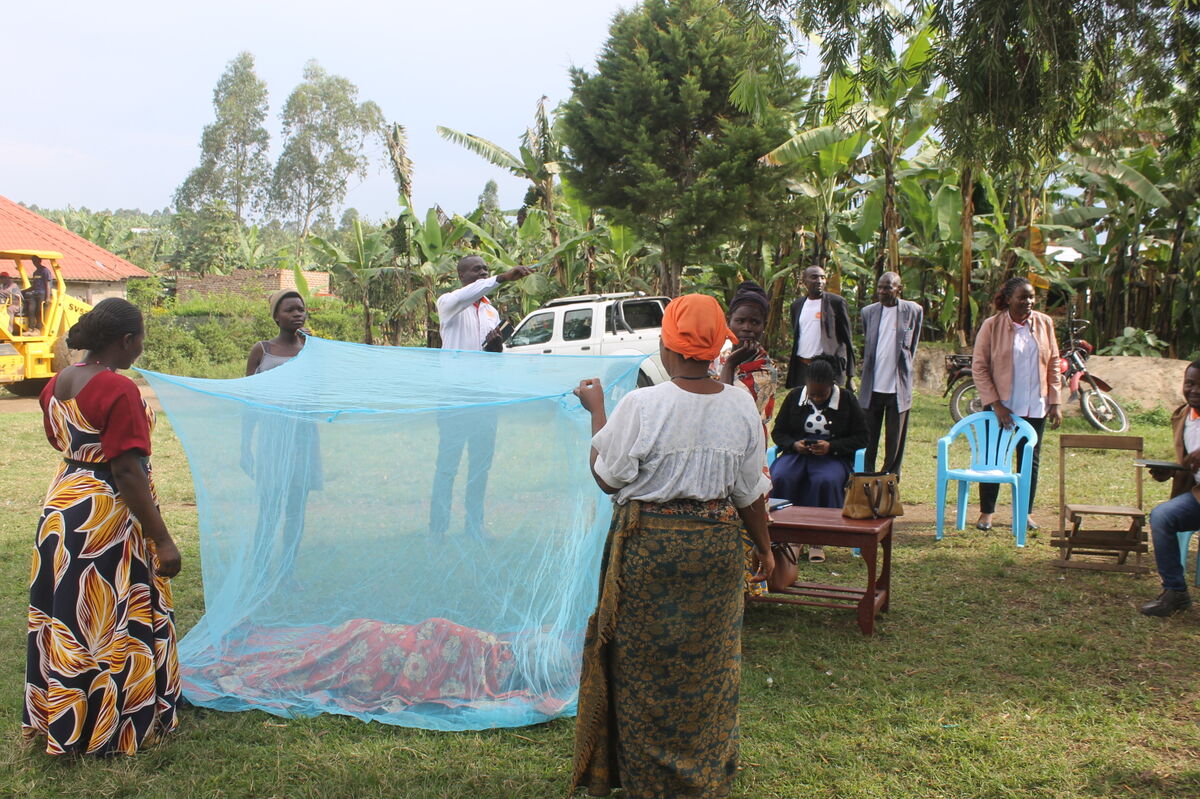
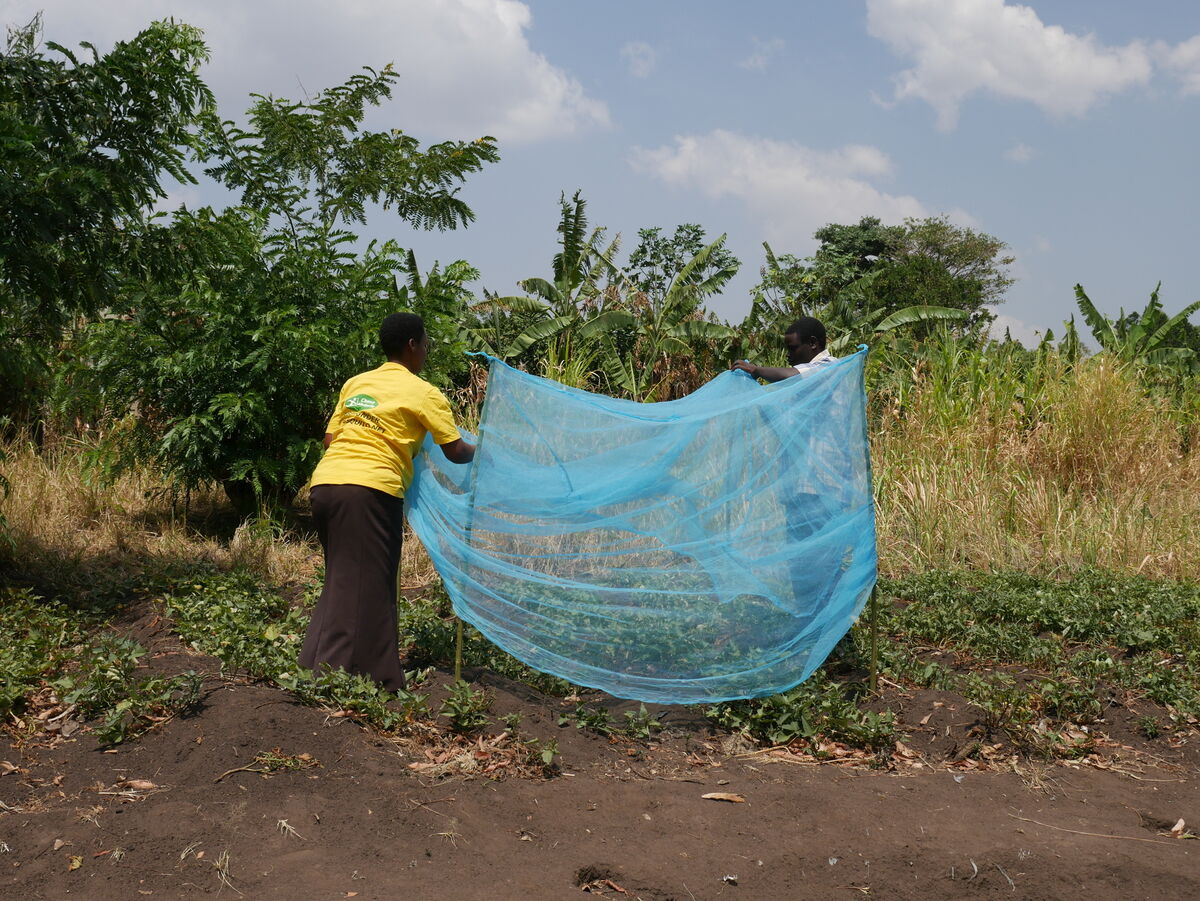
Village Health Advisors (ABs) demonstrating mosquito net useage in a rural villages
Yet, challenges remain. Malnutrition, especially among children in rural and hard-to-reach areas, continues to demand attention. Last year, Maranatha Health dedicated significant resources to identifying and treating malnourished children. Limited funding this year has forced a scale-back of direct support, with government-supplied nutrition supplements helping where available. Maranatha now focuses on community assessments and referrals, providing clinic-based care only for the most critical cases.
These experiences highlight both the progress achieved and the work still to be done. The decline in malaria demonstrates the power of partnership and persistence, while malnutrition underscores the ongoing need for investment, innovation, and collaboration to ensure no child is left behind.
Maranatha Health remains committed to working with government and partners to strengthen Uganda’s health system, one community at a time, ensuring that health, hope, and opportunity continue to reach those who need it most.


© Maranatha Health 2013-2026